


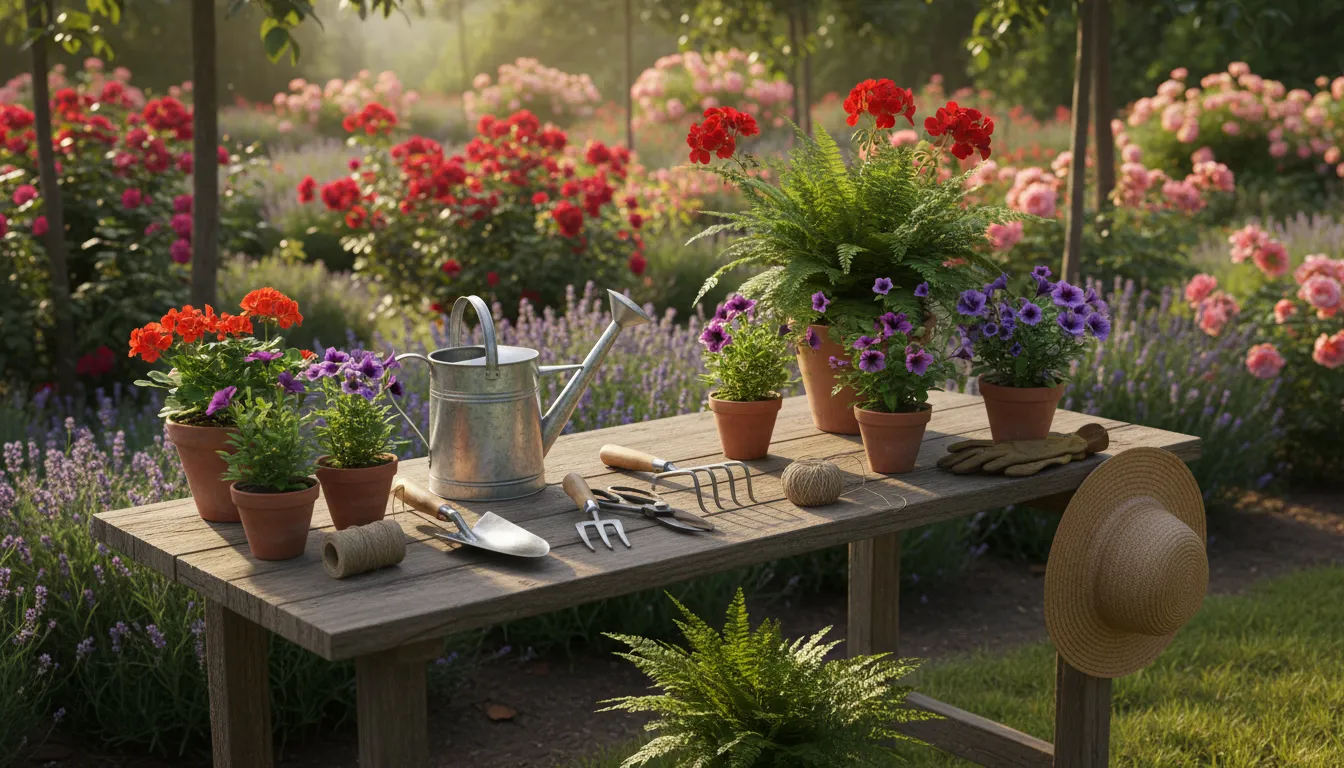
Discover how a well-planned gardening tools garden cultivates not just robust plants, but profound educational focus. Nature provides the ultimate calming classroom for cognitive growth, reducing anxiety while accelerating deep learning.
This comprehensive guide explores the transformative power of outdoor learning environments. You will learn to design a highly functional space, select proper equipment, avoid common layout pitfalls, and leverage nature to eliminate academic stress. Master the art of merging horticulture with structured educational frameworks.
The Connection Between a gardening tools garden and Educational Focus
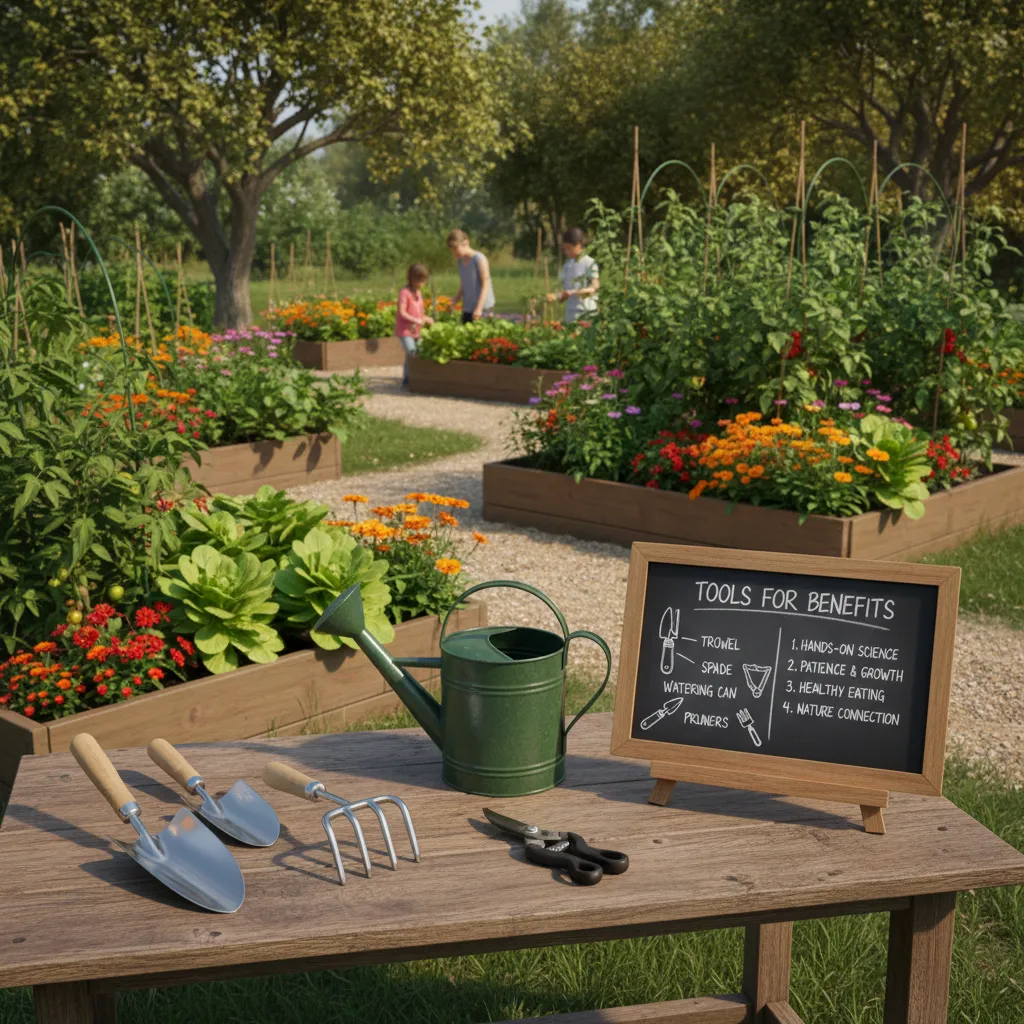
When we consider environments optimized for learning, we often picture sterile classrooms with rigid desks and artificial lighting. However, integrating a gardening tools garden into an educational curriculum completely shifts this paradigm. Nature naturally lowers cortisol levels, allowing the human brain to enter a state of relaxed alertness. This specific state of mind is highly conducive to absorbing complex information, solving difficult problems, and retaining long-term memories.
Building a functional outdoor space requires careful planning. You must view the environment not just as a place to grow vegetables, but as a dynamic, interactive laboratory. A proper gardening tools garden offers students a tangible way to connect abstract concepts to physical reality. Whether you are teaching biology through seed germination or mathematics through plot measurement, the physical act of working the soil anchors the lesson in the learner’s mind.
Why Nature Enhances Cognitive Development
Research from institutions like the Child Mind Institute indicates that students exposed to natural learning environments demonstrate better attention spans and higher emotional regulation. When learners step into a gardening tools garden, they leave behind the overstimulating digital landscape. The sensory input from nature—the smell of damp earth, the texture of leaves, the physical weight of a trowel—grounds them in the present moment.
This grounding effect is crucial for deep cognitive work. When the nervous system relaxes, the prefrontal cortex—the area of the brain responsible for executive functions like planning, reasoning, and logic—can operate at maximum capacity. Cultivating a garden demands patience, observation, and methodical action. These are the exact traits required for academic excellence. By making the garden a core component of your educational strategy, you teach learners how to regulate their focus naturally.
Essential Elements of a Successful gardening tools garden
To maximize the educational benefits of your outdoor space, you must structure it with intention. A haphazard collection of pots and rusted equipment will only create frustration. You need to design a space that invites curiosity while maintaining organizational clarity.
Selecting the Right Equipment
The foundation of your space lies in the equipment you choose. A gardening tools garden must be stocked with ergonomic, durable instruments that fit the physical capabilities of the learners using them.
- Hand Trowels and Transplanters: Essential for teaching fine motor skills and the delicate process of moving fragile seedlings.
- Pruning Shears: Excellent tools for demonstrating plant anatomy and the biological necessity of removing dead tissue to promote new growth.
- Measuring Tape and Rulers: Critical for integrating mathematics into the environment. Learners must calculate seed spacing and plot dimensions accurately.
- Soil Testing Kits: These introduce chemistry and the scientific method, teaching students how to analyze pH levels and nutrient density.
- Wheelbarrows and Shovels: Perfect for understanding physics, leverage, and the mechanics of moving mass efficiently.
Every tool serves a dual purpose: practical cultivation and academic demonstration. When you equip your gardening tools garden properly, you eliminate physical barriers to learning.
Creating Zones for Calm Learning
Spatial organization is just as important outdoors as it is indoors. Divide your gardening tools garden into distinct educational zones. Create a quiet observation area with comfortable seating where students can sketch plant life or write in their nature journals. Establish an active work zone for digging, planting, and harvesting.
By separating these areas, you teach students how to transition between different states of mental activity. The active zone requires physical energy and collaboration, while the observation zone demands silence and introspective focus. This spatial discipline enhances overall cognitive development and reinforces the importance of structured workflows.
Structured Comparison: Traditional Learning vs. gardening tools garden Environments
Understanding the differences between a standard classroom and an outdoor horticultural learning space highlights the immense value of this approach.
|
Educational Aspect |
Traditional Classroom |
gardening tools garden Environment |
|---|---|---|
|
Primary Stimulus |
Artificial lighting and screens |
Natural sunlight, fresh air, and tactile feedback |
|
Learning Style |
Passive reception of information |
Active, hands-on experimentation |
|
Stress Levels |
Often high due to rigid expectations |
Naturally lowered through interaction with nature |
|
Subject Integration |
Subjects are siloed |
Seamless integration of math, science, and art |
|
Physical Activity |
Sedentary for long periods |
Promotes healthy movement and motor skill development |
Common Mistakes to Avoid When Building Your Space
Even enthusiastic educators can make critical errors when designing an outdoor learning environment. Avoiding these pitfalls ensures that your gardening tools garden remains a place of calm focus rather than a source of stress.
- Overcomplicating the Layout: Designing a massive, intricate plot right away often leads to overwhelm. Start small. A few well-maintained raised beds offer more educational value than a sprawling, weed-infested field.
- Ignoring Ergonomics: Purchasing adult-sized, heavy equipment for young learners causes physical strain and discourages participation. Always scale the tools to the users.
- Forgetting the Academic Link: It is easy to get caught up in the manual labor of gardening and forget the lesson plan. Always explicitly connect the physical work back to the academic curriculum.
- Neglecting Storage: A cluttered environment creates a cluttered mind. Ensure you have a dedicated, organized shed or weather-proof box. A messy gardening tools garden destroys the calming aesthetic required for deep focus.
Pro Tips and Expert Insights for Maximizing Focus

Horticultural therapists and outdoor educators utilize specific strategies to keep learners engaged. Integrating these expert insights will elevate your educational approach.
Focus heavily on sensory engagement. Ask learners to describe the texture of the soil, the temperature of the water, and the sound of the leaves. This mindful observation anchors their attention and prevents their minds from wandering.
Make failure a core part of the curriculum. Plants will die. Seeds will fail to germinate. Pests will invade. Use these inevitable setbacks to teach resilience and the scientific method. Ask learners to hypothesize why a crop failed and design an experiment to fix the issue in the next planting cycle. A gardening tools garden is the safest place for a student to fail, analyze the data, and try again. Incorporating these outdoor learning strategies builds immense academic confidence.
Step-by-Step Guidance: Integrating Academics and Horticulture
To fully leverage your gardening tools garden, you must weave traditional academic subjects into the daily tasks of cultivation. This requires a deliberate, methodical approach.
Science and Biology in the Soil
The garden is a living biology textbook. Start by teaching the nitrogen cycle, photosynthesis, and cellular respiration through direct observation. Have students track the growth rate of different plant species under varying light conditions. Use magnifying glasses to study the intricate ecosystems of insects that inhabit the soil. This hands-on approach transforms abstract scientific theories into observable facts, solidifying the student’s understanding.
Mathematics in Plotting and Planning
Before a single seed touches the dirt, mathematics must be applied. Challenge learners to calculate the total square footage of the raised beds. Have them determine the volume of soil required to fill those beds. When planting, they must measure the exact distance required between seeds to ensure proper root development. This practical application of geometry and arithmetic proves to students that math is a vital, functional tool, rather than an arbitrary classroom exercise.
Overcoming Challenges in Outdoor Education
Transitioning to an outdoor learning model presents unique logistical challenges. Weather is unpredictable, pests can destroy months of work, and maintaining learner attention when squirrels or birds pass by requires skill.
You must build flexibility into your curriculum. If a sudden rainstorm interrupts a planting session, pivot to a lesson on meteorology and the water cycle. Teach students how to read the weather and plan their agricultural tasks accordingly.
To maintain focus amid natural distractions, employ strict time-blocking. Work in the gardening tools garden for twenty focused minutes, followed by a ten-minute period of unstructured observation. This structured rhythm trains the brain to sustain attention during work periods while allowing for necessary mental rest. Utilizing advanced environmental psychology techniques ensures that the outdoor space remains a productive classroom.
The Psychological Benefits of a gardening tools garden

Beyond academics, the psychological healing provided by a structured natural environment is profound. The act of caring for a living thing instills a deep sense of responsibility and empathy.
When learners dig their hands into the earth, they experience a literal grounding effect. The bacteria found in healthy soil, specifically Mycobacterium vaccae, has been shown to trigger the release of serotonin in the human brain. This biological reaction naturally elevates mood and decreases anxiety. A well-maintained gardening tools garden acts as a natural therapeutic intervention for students struggling with the pressures of modern education.
Reducing Academic Anxiety
Academic anxiety paralyzes cognitive function. Students who fear failure often refuse to engage with difficult material. The garden provides a low-stakes environment to rebuild that confidence. When a learner successfully nurtures a seed into a fruit-bearing plant, they experience a tangible, undeniable victory.
This success translates back into the traditional classroom. The patience learned while waiting for a tomato to ripen helps a student persevere through a difficult calculus problem. The resilience built by overcoming an aphid infestation gives them the grit to tackle a challenging essay. By cultivating a gardening tools garden, you are cultivating the student’s inner psychological fortitude.
To maximize these psychological benefits, ensure the environment remains a place of peace. Do not use garden chores as a punishment. The space must remain a sanctuary dedicated to calm observation, methodical work, and educational discovery.
In conclusion, transforming education requires us to look beyond four walls and a chalkboard. By embracing the structured, calming environment of an outdoor space, we give learners the tools they need to succeed academically and psychologically. We teach them patience, observation, and the undeniable value of consistent, focused effort.
Conclusion
Integrating a structured gardening tools garden into your educational approach revolutionizes how learners absorb and process information. By combining the natural calming effects of the outdoors with rigorous academic frameworks, you build unparalleled cognitive resilience and focus. Step outside, equip yourself properly, and start cultivating a richer, deeper educational experience today.
Frequently Asked Questions
What is the primary educational benefit of a gardening tools garden?
The primary benefit is the combination of hands-on, experiential learning with natural stress reduction. This environment lowers anxiety, allowing the brain to focus deeply and absorb complex scientific and mathematical concepts practically.
How do I keep learners focused outdoors?
Use strict time-blocking and assign highly specific tasks. Give them a precise measuring goal or a specific biological observation to make. This prevents the mind from wandering and anchors their attention to the physical environment.
What tools are absolutely necessary for an educational garden?
You need ergonomic hand trowels, measuring tapes for math integration, soil testing kits for science experiments, and properly scaled shovels. Ensure all equipment fits the physical size of the learners to prevent strain.
Can a gardening tools garden improve mental health?
Yes, interacting with soil and nature actively reduces cortisol levels and stimulates serotonin production. It provides a peaceful sanctuary that drastically reduces academic anxiety and promotes emotional regulation.
How do I incorporate mathematics into gardening?
Have learners calculate the area and volume of garden beds. Teach them to measure precise seed spacing, calculate growth rates over time, and estimate water volume requirements based on plant species and weather conditions.
What should I do if a crop fails?
Treat failure as a primary educational opportunity. Have the students investigate the cause of the failure using the scientific method. They can analyze the soil, research pest damage, and design a better strategy for the next planting cycle.
How much space do I need to create this educational environment?
You do not need a massive farm. A few carefully organized raised beds or even a series of large container pots can provide the exact same educational and psychological benefits if structured correctly.
Why is tool storage so important?
A cluttered space creates a cluttered mind. Teaching learners to clean and properly store their equipment builds discipline and respect for the environment. It also maintains the aesthetic calm required for a focused learning zone.
How does this environment help with attention deficit issues?
Natural environments provide “soft fascination,” which captures attention without draining mental energy. This allows the directed-attention centers of the brain to rest and recover, significantly improving focus capacity for those with attention deficits.
What is the first step to starting an educational garden?
The first step is planning the academic integration. Before buying seeds, outline exactly which math, science, and behavioral lessons you intend to teach. Then, design the physical layout of your gardening tools garden to support those specific lessons.
