

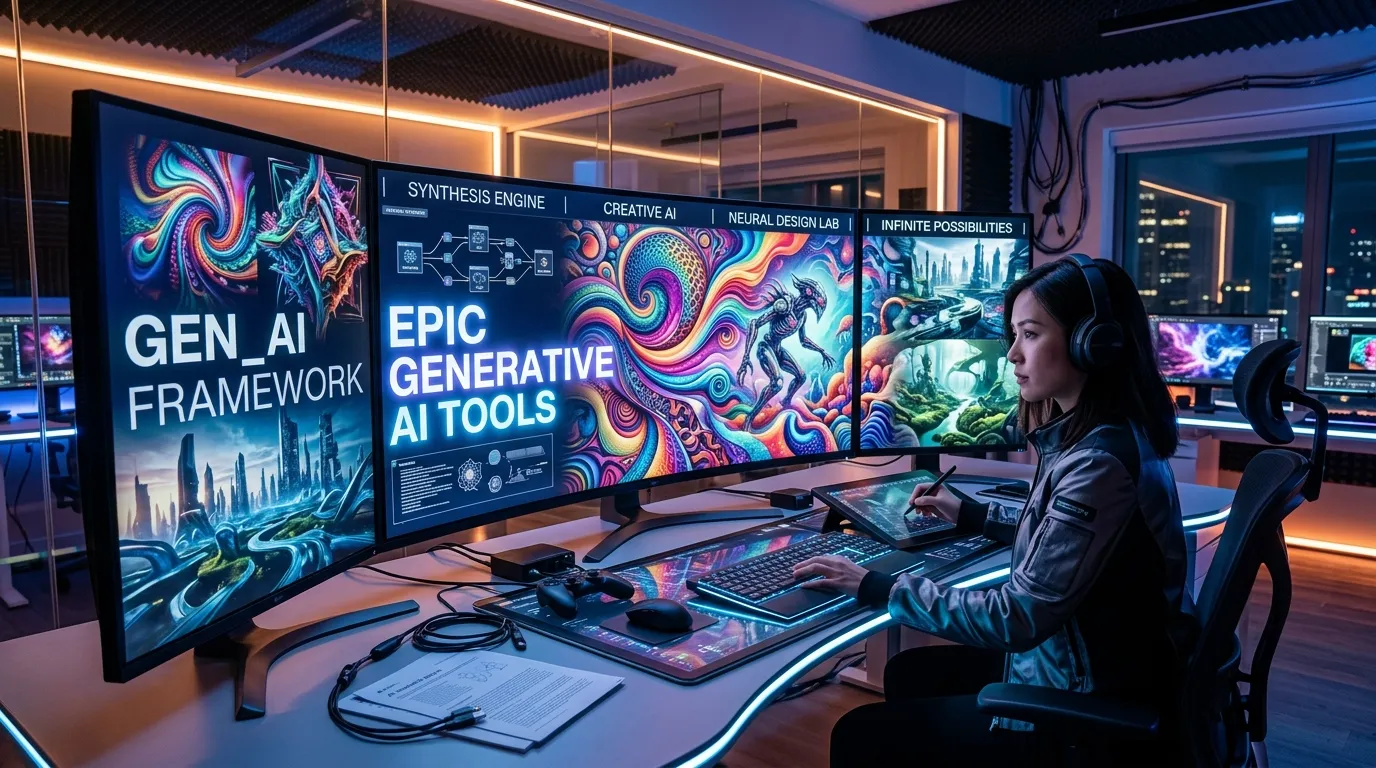
Modern classrooms demand modern solutions. By integrating epic generative ai tools into daily routines, educators can eliminate chaos, reduce anxiety, and foster a peaceful, hyper-focused learning environment.
This comprehensive guide explores the most effective AI platforms available for modern educators. You will learn how to evaluate software, implement targeted learning strategies, avoid common integration mistakes, and use expert tips to build a highly productive, calm, and deeply personalized student experience.
The Evolution of Classroom Technology

The landscape of modern education is undergoing a massive paradigm shift. Teachers and administrators are constantly searching for ways to manage increasing workloads while providing individualized attention to every student. In the past, educational technology often added to the chaos, requiring steep learning curves and constant troubleshooting. Today, the right epic generative ai tools do more than just automate grading and planning; they actively create an atmosphere of calm. When educators spend less time on repetitive administrative tasks, they can focus entirely on meaningful, empathetic student interaction.
Artificial intelligence applications help design quiet, focused study paths tailored to individual student needs. By continuously analyzing performance data, these systems adapt lesson plans in real-time. This dynamic adaptation reduces student frustration, limits behavioral disruptions, and significantly lowers classroom anxiety. By utilizing Educational Technology Integration strategies, schools are finding that epic generative ai tools are the ultimate solution to teacher burnout and student disengagement.
The Psychology of Calm in Learning
Students often feel overwhelmed by generic lesson plans that move either too fast or too slow for their unique cognitive processing speeds. When learners are pushed beyond their optimal zone of proximal development, they experience cognitive overload, leading to stress and disengagement. epic generative ai tools change this dynamic completely by facilitating adaptive learning technologies.
When a classroom integrates these advanced platforms, the entire psychological environment shifts. Students no longer feel the pressure to compete with peers who might grasp concepts faster. Instead, they interact with intelligent tutoring systems that patiently guide them through complex topics. This personalized pacing inherently calms the classroom. Teachers transform from stressed lecturers into relaxed facilitators, moving around the room to offer targeted human connection where it is needed most.
Reducing Cognitive Load for Educators
Educators face immense, often unmanageable pressure to deliver high-quality instruction while simultaneously managing endless paperwork, parent communications, and curriculum alignment. epic generative ai tools act as digital teaching assistants, absorbing the brunt of this cognitive load.
When teachers use automated grading platforms, they reclaim hours of their personal time. They can generate outlines, worksheets, discussion questions, and differentiated reading materials in seconds. This reduction in administrative burden translates directly into a calmer demeanor. A relaxed teacher sets the tone for a relaxed classroom. The emotional regulation of the instructor profoundly impacts the emotional regulation of the students. Therefore, epic generative ai tools are not just academic aids; they are essential instruments for psychological well-being in the educational sector.
Core Benefits of Using epic generative ai tools

To fully understand how these technologies are revolutionizing schools, we must examine the specific, measurable benefits they provide to both the learner and the facilitator.
Personalized Pacing for Every Student
The traditional educational model relies on a one-size-fits-all approach. This is fundamentally flawed. Every student’s brain wires differently. epic generative ai tools excel at analyzing a student’s current understanding and dynamically adjusting the difficulty of the material. If a student struggles with algebraic fractions, the AI will provide additional scaffolding, visual aids, and foundational practice problems before moving on. If another student masters the concept immediately, the AI advances them to more complex problem-solving scenarios.
This leads to the creation of robust personalized learning paths. Students remain in a state of flow—the psychological state of being completely immersed and focused on a task. Flow eliminates boredom and anxiety, the two primary drivers of classroom disruption.
Instant, Emotionally Neutral Feedback
Waiting days or weeks for a graded assignment diminishes the learning process. By the time a student receives feedback, they have often forgotten their thought process. epic generative ai tools provide instant corrections. Furthermore, this feedback is emotionally neutral. Students who are sensitive to criticism often respond better to a machine gently pointing out an error than to a human teacher, as they do not feel judged or embarrassed in front of their peers.
Streamlining Complex Grading
Grading complex assignments, especially in STEM fields or long-form essays, is notoriously time-consuming. epic generative ai tools utilize advanced natural language processing and computer vision to assess student work with incredible accuracy. Teachers can define specific rubrics, and the AI applies these rules consistently across hundreds of submissions. This not only saves time but also eliminates grading fatigue and inherent human bias, ensuring fair and equitable assessment for all learners.
Comparison Table: Top epic generative ai tools
Choosing the right software requires understanding the specific needs and technological infrastructure of your classroom. Below is a structured comparison table of highly rated platforms that help organize and calm the educational environment.
|
Platform Name |
Primary Purpose |
Key Features |
Best Use Case |
|---|---|---|---|
|
Eduaide |
Lesson Planning & Curriculum |
Resource creation, syllabus drafting, personalized study guides, differentiation |
Teachers needing comprehensive curriculum and differentiation support |
|
MagicSchool |
All-in-One Educator Hub |
Assessment tools, IEP generation, rubrics, communication templates, behavioral tracking |
Schools looking for a unified, versatile AI integration |
|
ClassPoint |
Interactive Presentations |
Gamified quizzes, live annotations, engagement tracking, seamless PowerPoint integration |
Enhancing calm focus and participation during live lectures |
|
QuestionWell |
Assessment Generation |
Automated quiz creation from reading materials, easy LMS export options |
Quickly building targeted knowledge checks and formative assessments |
|
Gradescope |
AI-Assisted Grading |
Rubric development, handwriting recognition, detailed analytics, coding assignment checks |
Streamlining massive grading workflows, especially in higher education |
Deep Dive: Leading epic generative ai tools Transforming Schools
Let us explore some of the most influential platforms currently reshaping the educational landscape. By integrating these systems, schools are seeing a marked increase in student engagement and academic performance.
Eduaide: The Lesson Planning Assistant
Eduaide is a phenomenal platform for educators who spend hours crafting lesson plans. It is one of the premier epic generative ai tools for generating creative, standard-aligned lesson materials. Teachers can input a broad topic, and Eduaide will produce a comprehensive plan including warmup activities, direct instruction scripts, guided practice, and exit tickets.
Furthermore, it excels at differentiation. A teacher can generate a reading passage at a 10th-grade reading level and instantly ask Eduaide to rewrite the exact same content for a 5th-grade reading level, ensuring all students can access the core concepts without feeling singled out. This builds a foundation for inclusive education.
MagicSchool: The Comprehensive Solution
MagicSchool is rapidly becoming a staple in K-12 environments. As one of the most versatile epic generative ai tools, it offers over sixty specific modules designed for teachers. From drafting emails to irate parents using a calm, professional tone, to generating individualized education program (IEP) goals, MagicSchool handles the heavy lifting.
By automating these highly stressful, high-stakes tasks, MagicSchool allows educators to breathe. It helps them reclaim their planning periods, reducing the emotional exhaustion that plagues the profession.
Gradescope: Revolutionizing Assessment
Developed by researchers at UC Berkeley and now part of Turnitin, Gradescope is an absolute game-changer for assessment. It is among the most powerful epic generative ai tools for high school and university instructors. Students upload pictures of their handwritten assignments, and Gradescope’s AI groups similar answers together. A teacher can grade one specific type of error, and the AI will automatically apply that grade and feedback to every other student who made the identical mistake. This ensures unprecedented consistency and cuts grading time by up to 70%.
ClassPoint: Interactive Focus
Maintaining focus during direct instruction is challenging. ClassPoint integrates directly into Microsoft PowerPoint, turning static slides into interactive, data-driven experiences. While not a traditional text generator, it uses AI algorithms to analyze student responses in real-time during live quizzes and polls. This makes it one of the most effective epic generative ai tools for keeping students engaged without the chaotic energy of traditional classroom games.
Pro Tips: Maximizing Your AI Investment
To truly transform your educational environment and get the most out of your technological investments, follow these expert insights. Implementing epic generative ai tools requires strategy, not just a software license.
- Start Small and Scale: Introduce one tool at a time. Let students and teachers get comfortable with the interface before rolling out a massive suite of applications. Overwhelming staff with technology is counterproductive to establishing a calm environment.
- Master Prompt Engineering: The quality of the output from epic generative ai tools depends entirely on the input. Train your staff on how to write clear, highly specific prompts. Instead of typing “make a math quiz,” type “create a 10-question multiple-choice quiz on adding fractions with unlike denominators, aimed at 6th graders, including three real-world word problems.”
- Establish Clear Usage Guidelines: Set firm rules for how and when students are allowed to use AI. Transparency prevents academic dishonesty and sets clear ethical expectations. Promote AI literacy so students understand the limitations and biases of the technology.
- Audit and Reflect Regularly: Periodically review how the software is performing. Are grades genuinely improving? Is teacher stress visibly decreasing? Use data from high-authority education researchers to inform your ongoing tech strategy and adjust course as necessary.
- Maintain the Human Element: Never forget that teaching is a deeply human endeavor. Use epic generative ai tools to handle the robotic tasks so you can be more human with your students.
Common Mistakes to Avoid When Using epic generative ai tools
Implementing new technology can inadvertently disrupt the very peace you are trying to create. Avoid these common pitfalls to ensure a smooth, productive transition to an AI-enhanced classroom.
- Over-reliance on Automation: Never let epic generative ai tools completely replace the human element of teaching. Students require empathy, nuanced understanding, and mentorship, which no algorithm can provide. Use AI as a co-pilot, not an autopilot.
- Ignoring Data Privacy Laws: Always ensure the tools you select comply with stringent student data protection regulations like FERPA (Family Educational Rights and Privacy Act) or GDPR. Never input personally identifiable information (PII) into an open AI model.
- Skipping Professional Development: Throwing new software at educators without proper, ongoing onboarding leads to immense frustration and low adoption rates. Invest heavily in training your staff on how to use epic generative ai tools effectively.
- Assuming Perfect Accuracy: AI can and will hallucinate or provide incorrect, biased, or outdated information. Teachers must act as the ultimate editors. Always carefully review, edit, and verify generated content before distributing it to students. Blind trust in AI is a critical pedagogical error.
The Future of epic generative ai tools in Education

As we look toward the horizon, the capabilities of epic generative ai tools will only expand. We will likely see the rise of highly sophisticated virtual reality learning environments where generative AI creates dynamic, interactive historical simulations or complex scientific models in real-time based on student inquiries.
Furthermore, predictive analytics will become more refined. epic generative ai tools will not just react to student errors; they will predict them based on historical data patterns, alerting teachers to intervene before a student even realizes they are confused. This proactive approach will further cement the calm, supportive nature of the future classroom. By prioritizing Student Wellness and Mental Health alongside academic rigor, these tools will redefine what it means to be successful in school.
Conclusion
Integrating epic generative ai tools into your classroom strategy is no longer a futuristic dream; it is a present-day necessity for creating a focused, calm, and highly personalized learning environment. By automating administrative burdens and tailoring educational pathways, these tools empower educators and uplift students. Are you ready to upgrade your teaching methodology? Start exploring these intuitive platforms today and revolutionize your educational approach for a calmer, brighter tomorrow.
Frequently Asked Questions
1. What exactly are epic generative ai tools in the context of education?
epic generative ai tools refer to advanced machine learning algorithms capable of creating new, original content—such as lesson plans, quizzes, personalized feedback, and reading materials—based on specific prompts provided by educators or students.
2. Will epic generative ai tools eventually replace human teachers?
No. epic generative ai tools are designed to assist, not replace. They excel at handling repetitive administrative tasks and data analysis, which frees up human teachers to provide the empathy, mentorship, and complex critical thinking guidance that machines simply cannot replicate.
3. Are epic generative ai tools safe regarding student data privacy?
Safety depends entirely on the specific platform chosen and how it is configured. Schools must strictly vet tools to ensure they comply with educational privacy laws like FERPA and GDPR, and educators should never input personally identifiable student information into public AI models.
4. How do epic generative ai tools help students maintain focus?
These tools maintain focus by creating deeply personalized learning paths. By continuously matching the difficulty and pace of the material to the student’s exact cognitive needs, epic generative ai tools prevent the frustration and boredom that typically break concentration.
5. What is the most effective way to use epic generative ai tools for grading?
Tools like Gradescope are highly effective because they use AI to group similar student answers together, allowing teachers to grade an entire batch of similar responses simultaneously. This ensures consistent rubric application and drastically reduces grading time.
6. Can epic generative ai tools assist students with learning disabilities?
Absolutely. epic generative ai tools can instantly adjust the lexile reading levels of texts, provide accurate text-to-speech functionality, generate visual aids, and scaffold complex problems, making the curriculum significantly more accessible for students with diverse learning needs.
7. How do schools prevent students from cheating using epic generative ai tools?
Schools should focus on teaching AI literacy, establishing clear and enforceable academic integrity policies, and redesigning assessments to require deep personal reflection, in-class verbal defenses, or hands-on problem-solving rather than simple factual recall.
8. Is comprehensive teacher training necessary before implementing epic generative ai tools?
Yes, it is vital. Without proper, ongoing professional development regarding prompt engineering, tool capabilities, and ethical use, teachers will likely find the software frustrating, leading to poor implementation and wasted resources.
9. Where should a school administration start when integrating epic generative ai tools?
Administrators should start by surveying their staff to identify the single biggest pain point—such as excessive grading time or lesson planning burnout. They should then select one targeted AI tool to solve that specific problem, pilot it with a small group, and expand gradually.
10. Do epic generative ai tools integrate well with existing Learning Management Systems (LMS)?
Many top-tier epic generative ai tools are explicitly designed with LMS integration in mind. Platforms like Canvas, Blackboard, and Google Classroom frequently offer plugins or LTI (Learning Tools Interoperability) connections that allow seamless data and assignment transfer between the AI tool and the gradebook.
